

Why Do I Feel Overwhelmed All the Time? The Hidden Emotional Patterns Behind Overwhelm
Exploring the hidden emotional patterns behind feeling overwhelmed, including over-giving, people-pleasing, perfectionism, busyness, control and difficulty letting go.
What does it actually mean to feel overwhelmed?
Most of us are rushing through life, trying to finish endless to-do lists and keep up with the pressures and expectations that are put on our shoulders from this busy world.
I’m sure I’m not the only one who can feel guilty when I rest, feeling like I haven’t worked hard enough or achieved enough to put my feet up and relax.
And it’s not only about resting, sometimes, the day becomes a race to get through everything - work, looking after family, life admin, household tasks - leaving very little room for us to pause, breathe and process how we’re actually feeling, and what we truly need in the moment.
We live in a world that encourages this fast-paced lifestyle - we’re constantly told how to move faster, get things done quicker, optimise and speed everything up, but for most of us, this only serves to keep us in a constant state of overwhelm.
A feeling like we can’t keep up, we’re not doing enough, and there’s no time to switch off and simply ‘exist’. This can feel exhausting and emotionally draining, to the point where we can’t see how it will ever change.
If you also feel like this, you’re not alone. In this article I’m going to be exploring the hidden emotional patterns creating this sense of rush and overwhelm, and what you can start to do about them.
Why do I feel overwhelmed all the time?
One of the key reasons why we can struggle with feeling constantly overwhelmed is that we’re picking up on everything going on around us.
Many of us are very emotionally and energetically sensitive, but we may not yet be aware of it. It took me years to realise that I was sensitive to the point where I was absorbing the emotions of other people around me, and wondering why I was feeling so overwhelmed all of the time.
If you’re like me, you can probably read the emotions of someone when the walk into the room. You can feel when they’re angry, when they’re stressed, or sad. This can be a gift in itself, but it can often be a burden when we don’t know how to manage it.
Often, our sensitivity is finely tuned when we’re children, learning to read the emotions of the adults and our parents, sometimes in order to understand, and sometimes in order to stay safe.
However, when we’re so tuned into the world around us, whether it’s the people or the places that we visit, we need to be discerning of how open we are to absorbing the energies around us. If you’ve ever found yourself in a busy place or surrounded by lots of people for a long period of time, you may notice an extra level of tiredness and overwhelm that has nothing to do with you, and everything to do with all the energies that your processing from your external environment.
When taking on too much becomes a pattern
Another reason why we may be feeling so overwhelmed in our life can be connected to how much we’re taking on for other people. Many of us are deeply giving, caring and empathetic, and so we naturally want to help and support people around us.
While giving can be a wonderfully altruistic way of being, it can also have a detrimental effect if it’s not done in a balanced way. Many of us can find ourselves in the role of carer, fixer and emotional support aunt for our friends, colleagues and family, without realising the impact it’s having on our own wellbeing.
We can feel a great reward from helping others, yet if we are constantly giving, and not allowing ourselves to equally receive, then we are going to feel that overwhelm, resentment and burnout at some point, because we cannot give from an empty cup.
Taking on too much responsibility is often something that can come from a place of wanting to help others and be of service, without realising that sometimes we need to help ourselves, first and foremost, so we can be in a stronger place to help the world.
We just need to remind ourselves that we are also worthy and deserving of the support we so willingly give to other people. When we find our balance between giving and receiving, then the overwhelm often disappears.
People-pleasing, boundaries and the fear of letting people down
Carrying on with the theme of overgiving and how it can lead to overwhelm, it also feels important to mention boundaries when we’re talking about taking on too much responsibility.
As I mentioned above, we often have a desire to help others, but sometimes we can tip into overgiving, leading to imbalance in our own lives, and the overwhelm and emotional exhaustion that comes with it.
Boundaries are a really important piece to mention here, because if we don’t have them with ourselves, it’s much harder to build them with other people. People often talk about setting boundaries with others, but in my opinion we need to have them set firmly with ourselves as a priority.
A lot of the times that we give to others are because we want to help, but there’s also a secondary gain to helping others, and this is about how it makes us feel about ourselves. When we overgive it’s sometimes our way of proving to ourselves that we’re ‘good people’ - this is something that’s talked about often enough, but it’s very relevant for this subject.
When I was in my twenties working in London I wore my badge of busyness with such pride. The busier I was with my work, the more important I felt. And I see this within others too - they are constantly helping other people, but there’s the air of martyrdom about them that says “see what I’m doing, look how exhausted I am helping others”.
There’s no shame when we see the hidden patterns under the surface like this one, it’s just there to be acknowledged and recognised for what it is.
→I explore the deeper patterns behind busyness and burnout in more detail here and in this free workshop below.
Why staying busy can be a form of emotional avoidance
One of the main reasons we feel overwhelmed is when we’re so busy we don’t have time to think, feel or process what’s really going on. And there’s a very hidden reason behind this.
Often, we slip into behaviours and ways of being as a protective measure in order not to face up to something or feel the deeper issue going on. And staying busy is one of our ego’s easiest ways to make sure we’re not feeling our emotions.
Again, I am writing this from my own experience of being a very busy person, whirling through life, filling up every waking hour, in order to avoid my feelings. I see this behaviour in so many people, as well as myself, because it’s the easiest distraction tactic there is. The problem is, when we keep ourselves so busy, we can tip into overwhelm, which doesn’t serve us at all, it keeps us scattered, exhausted and ungrounded.
The trick with this one is to notice how we’re staying busy in order to fill the emptiness and silence that might bring some things up to the surface that we don’t want to acknowledge.
As this is often a deeply-embedded behaviour, it can take some time to learn how to sit still and just ‘be’ with whatever is coming up to be felt. It may be an uncomfortable emotion, a difficult memory, unprocessed emotional hurt, a current challenge that we can’t deal with facing.
Whatever it is, this is often what we’re running away from and staying busy because of, in order not to face it.
Perfectionism and the pressure we put on ourselves
We can’t talk about overwhelm without discussing perfectionism and the role it plays.
One of the biggest hidden emotional patterns underneath overwhelm can be this need to get it done perfectly. This is often a powerful driver behind overworking and overachieving, which both lead to overwhelm.
Perfectionism is often greatly misunderstood. It isn’t merely about the need to get things done perfectly, it’s about the internal desire to prove ourselves and feel worthy in the eyes of those who we believe to hold our worth and value in their hands.
We want to meet their expectations, and then go beyond them.
This is about proving ourselves to our parents, to the world, and to our God/the Universe. Parents are merely a mirror to our relationship with Source, and even if we’re not aware of it, when we try to prove ourselves, we are trying to prove ourselves worthy of the ‘love from above’.
As a self-proclaimed perfectionist in recovery, I can see the hidden emotional patterns within me that drive my desire to prove myself by getting as much done as possible. And when I’m trying to get as much done as I can, in order to prove my value, I can easily slide into exhaustion from having too much on my plate.
When we start to ease the pressure on ourselves, we can begin to slow ourselves down and find that balance in our lives again.
→ I explore the deeper patterns behind perfectionism, overthinking and self-doubt in more detail here.
Overwhelm, control and the difficulty of letting go
One of the final, and key, hidden emotional patterns behind overwhelm is about how open we are to receiving support.
Often, we take on too much because we want to stay in control - we want to stay in control of the work that we do and how we’re perceived. Sometimes this is due to a fear of losing control and what might happen if we relinquish it, and other times this is linked to a lack of trust that we will be supported if we let go.
A good example of being overwhelmed connected to the fear of losing control is on a recent road trip to Scotland my boyfriend and I took, where I wanted to do most of the driving because I didn’t want to relinquish control. I didn’t trust him enough to drive us safely so I micromanaged his driving like the worst backseat driver imaginable, due to my fear of letting go of that control.
As a result I was over-vigilant and ended the trip feeling drained and exhausted - a classic example of overwhelm from trying to take control and all of the burden on my shoulders - which was entirely unnecessary.
(He’s a wonderful driver by the way - this was just all of my emotional stuff coming up to be integrated!).
This is perhaps why so many business owners struggle to feel safe to hand over their business to other employees, and can get stuck in micro-managing to the point of overwhelm and burnout.
Why overwhelm can eventually lead to burnout
And speaking of burnout, this is one of the most common end results of overwhelm.
We aren’t designed to be constantly busy, constantly stressed and always on-the-go. Neither are we supposed to be constantly in our heads and worrying about everything small thing that we have to do to keep our lives ticking over.
Yet, this is often the way many of us are living. We are constantly thinking, planning, analysing, organising and remembering things within our minds. And while we think this is harmless, when we are overburdened emotionally and mentally, it begins to lead into the physical body, because they are all intrinsically connected.
The mind and body are one unit, working together to keep balance. Yet if we stay in a state of overwhelm we may begin to experience symptoms that begin to slow us down, which are our red flag to show us how we’re out of balance.
What is your overwhelm trying to tell you?
If you’ve read this far, perhaps you can recognise yourself in one of two of these hidden emotional patterns that are operating under the surface of your overwhelm.
And if so, this is a really positive thing, as it’s only when we begin to acknowledge the truth within ourselves, that we can begin to move out of overwhelm and into greater levels of self-awareness and compassion.
None of us are perfect, and we’re not meant to be, we’re all just doing our best, with the tools that we have, to make the most out of our lives. If you can see yourself reflected back in some of these patterns, then you’re absolutely not alone. In writing this I recognised myself in all of them!
The lovely thing is that these are just patterns that are ready to be addressed and treated with the deepest love and compassion - because together, these are the two biggest catalysts that can create change in our lives.
If you feel you need some deeper support understanding and working through the emotional patterns underneath your overwhelm, you can also explore my Divine Healing sessions.
Further Support & Resources
If you’re navigating emotional challenges or feeling weighed down by old patterns, here are a few gentle ways to support yourself:
Join the next Soul Healing Workshop
Come and explore the deeper emotional patterns, hidden in the Soul Contract, driving your behaviours.Discover your Soul Contract
Gain insight into the hidden patterns shaping your reality, and understand why certain emotional themes keep repeating in your life.Join my Healing Programme
Experience a shared, guided space for emotional release and support, and connect with others on a similar path.Stay connected
Join my newsletter for monthly updates alongside the latest insights from the blog.
Carry on exploring


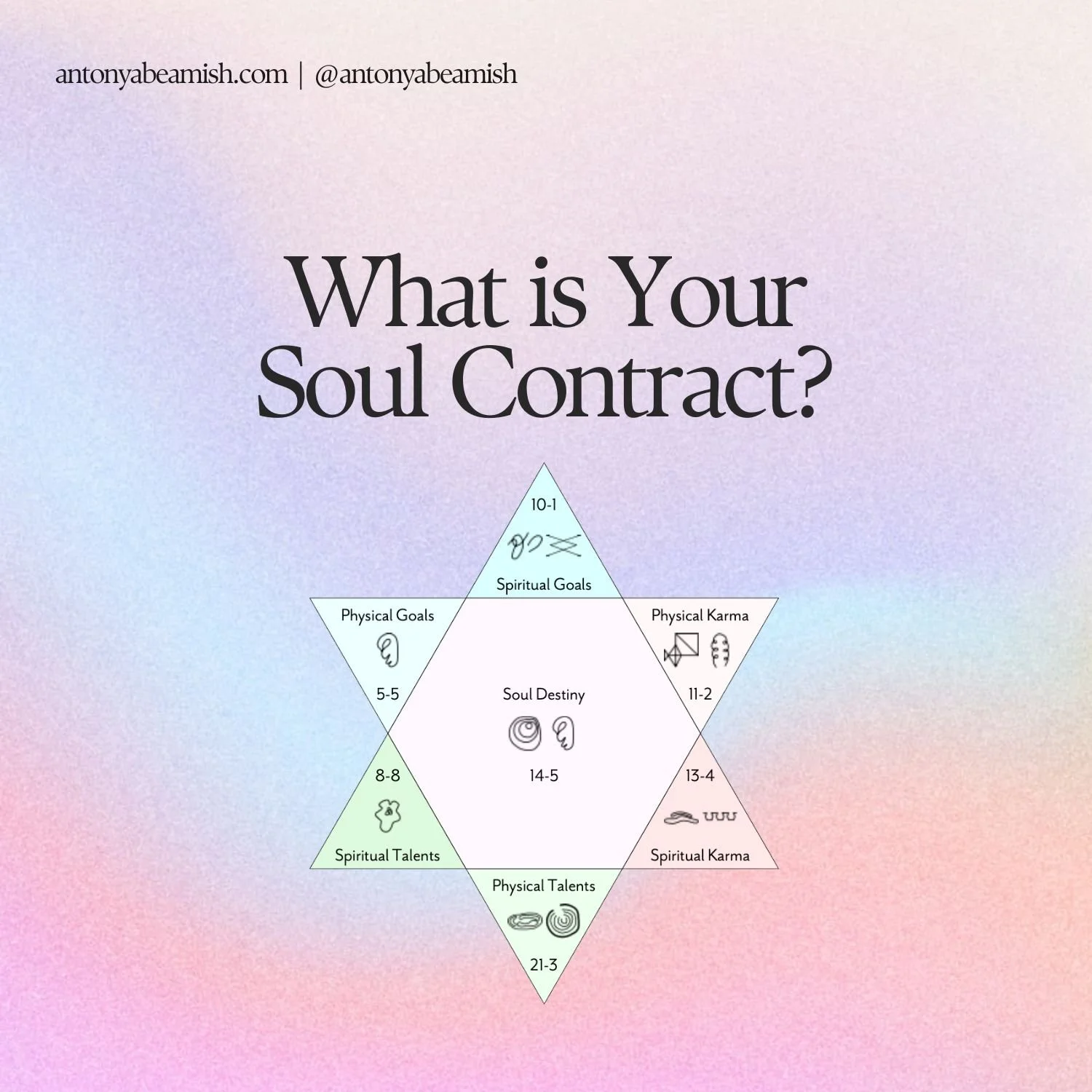





What are the hidden challenges within each Soul Contract number? This guide helps you understand your unique challenges and how to transmute them.